
Cooking with Care: Preserving Confidence and Routine for People Living with Dementia
Food is rarely just about nutrition. For many older people, cooking has been a source of pride, routine, and connection for decades. A meal prepared at home — however simple — carries meaning that no ready meal can replicate.
But as people age, or when dementia is involved, preparing food safely and confidently can become more difficult. This is where cooking with care comes in. It is not about taking over. It is about being alongside — supporting someone to stay involved in something that matters to them, while making sure they are eating well and staying safe.
What Does Cooking with Care Mean in Practice?
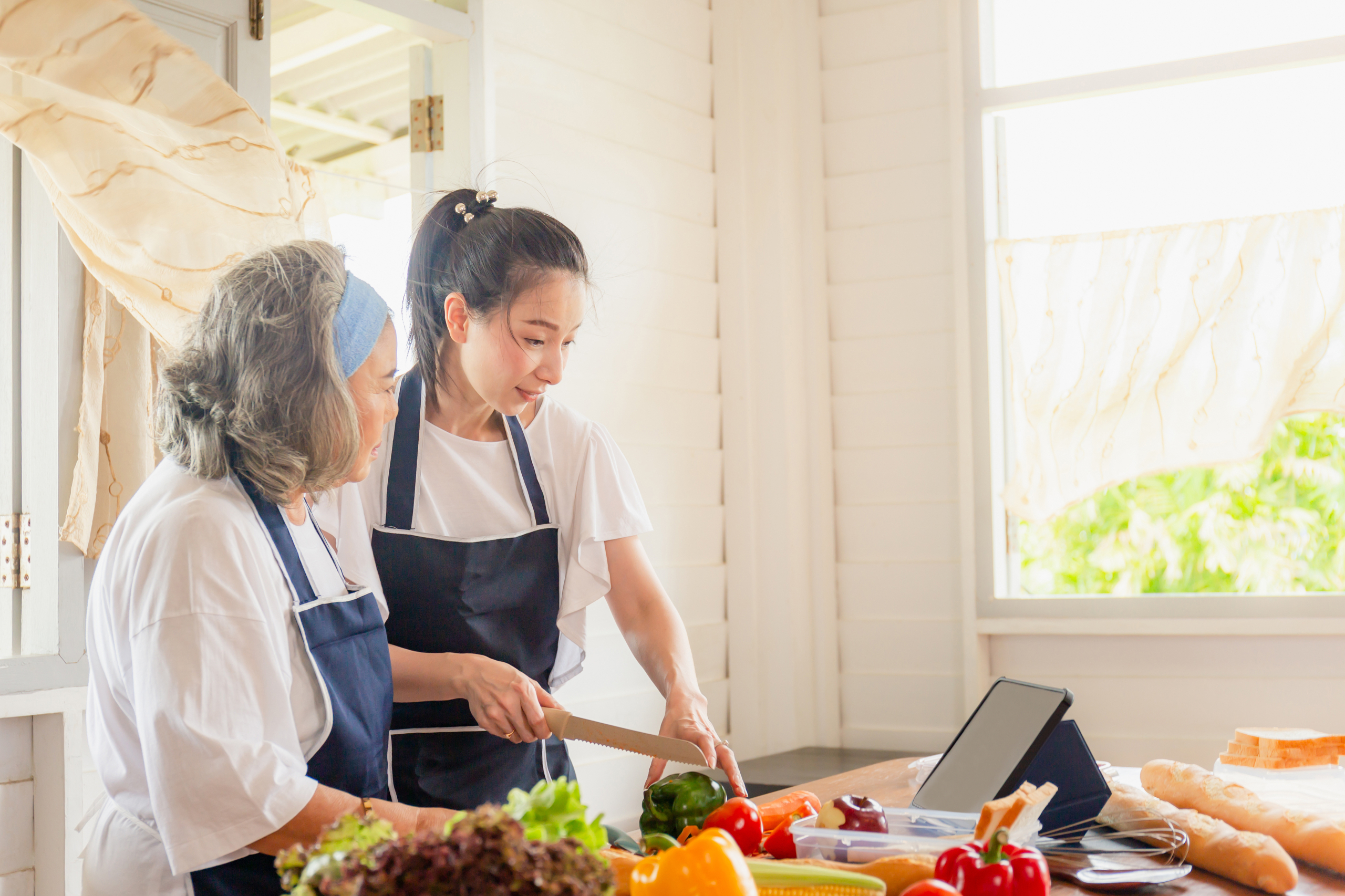
Cooking with care is a person-centred approach to food and mealtimes within home care. Rather than a carer preparing everything independently while your loved one waits in another room, the individual stays involved at whatever level is comfortable and safe for them.
This might look different for each person. For one person it could mean:
- Sitting at the kitchen table choosing what to have for lunch
- Measuring out ingredients or stirring a pot
- Following a favourite recipe they have made for years
For another, it might simply mean:
- Being in the kitchen together while the carer cooks
- Laying the table or washing up afterwards
- Talking about food they love, memories connected to meals, or what they fancy that week
The goal is participation, not performance. There is no pass or fail — only what works for this person, today.
Why Nutrition Matters More as We Age
Poor nutrition is one of the most underrecognised health concerns among older people at home. According to guidelines from the NHS on nutrition and older people, maintaining a balanced diet is crucial for preventing muscle wastage and supporting overall systemic health.
When nutrition drops, it can quickly contribute to:
- Unintended weight loss and muscle weakness
- Weakened immunity and slower recovery from illness
- Fatigue and low mood
- Increased risk of falls
- Cognitive decline
Several factors make eating well more difficult in later life. As detailed by Age UK’s advice on eating well in later life, changes in taste, medication side effects, and mobility challenges all play a role. Common hurdles include:
- Reduced appetite due to medication, illness, or low mood
- Difficulty preparing meals because of reduced mobility or dexterity
- Forgetting to eat, or losing track of meals — particularly common in dementia
- A lack of motivation to cook for one person
- Difficulty getting to the shops for fresh ingredients
Cooking with Care and Dementia
For people living with dementia, the kitchen can present specific risks — leaving the hob unattended, forgetting whether a meal has been prepared, or becoming confused about familiar tasks. These concerns are real, and safety always comes first.
But this does not mean someone with dementia should be excluded from food preparation. With the right support, they can remain involved in ways that are both safe and genuinely meaningful.
As dementia specialists, we understand how to adapt the cooking environment and the care approach to support participation without risk. Our carers know how to identify safe tasks, use familiar routines to provide calm, and guide gently without making the person feel overly supervised.
The sensory experience of cooking — the smells, textures, and familiar sounds — can also provide gentle cognitive stimulation. To see how we incorporate these techniques into broader routines, find out more about our dementia care at home.
Building Confidence and Preserving Independence
One of the risks of home care, if it is not approached thoughtfully, is that it gradually erodes the independence of the person being supported. When everything is done for someone rather than with them, they can begin to feel less capable — even when they are not.
Cooking is a clear example of where this matters. Many older people have cooked throughout their adult lives. It is a skill they are proud of, a way of caring for others, and part of how they understand themselves.
Cooking with care preserves that identity. It says: your preferences still matter, you are still capable, and this is still your kitchen.
Mealtimes as Social Connection
For people who live alone, mealtimes can be one of the loneliest parts of the day. Research consistently shows that eating with others improves appetite, mood, and overall quality of life.
A carer who stays to share a cup of tea or sits at the table while someone eats provides far more than practical help. This is where cooking with care and our dedicated companionship care naturally overlap — nourishing both body and spirit.
What Cooking with Care Looks Like as Part of Our Home Care Service
For families looking for supportive home care in Garstang, cooking with care is not an add-on to our service — it is embedded in how we think about holistic support.
As part of a customized companionship care plan, this can include:
- Planning weekly menus based on the person’s tastes, preferences, and dietary requirements
- Accompanying your loved one to local shops or markets if they enjoy choosing their own ingredients
- Preparing meals together during home visits, with the person involved at whatever level feels right
- Ensuring regular, consistent mealtimes — particularly important where dementia is involved
- Reporting any changes in appetite, eating habits, or behaviour to the family
Home Care in Garstang and Longridge
If you are looking for home care that genuinely goes beyond standard personal care tasks, we would be glad to talk with you.
Our approach is holistic and person-centred. We take time to understand what someone values, what gives them confidence, and how they want to be supported. Whether you require our specialized home care in Garstang, we are here to help.
To find out more about cooking with care, companionship support, or holistic home care in the surrounding Lancashire areas, please contact our friendly team today. We can help you understand the best next step for your loved one.


