
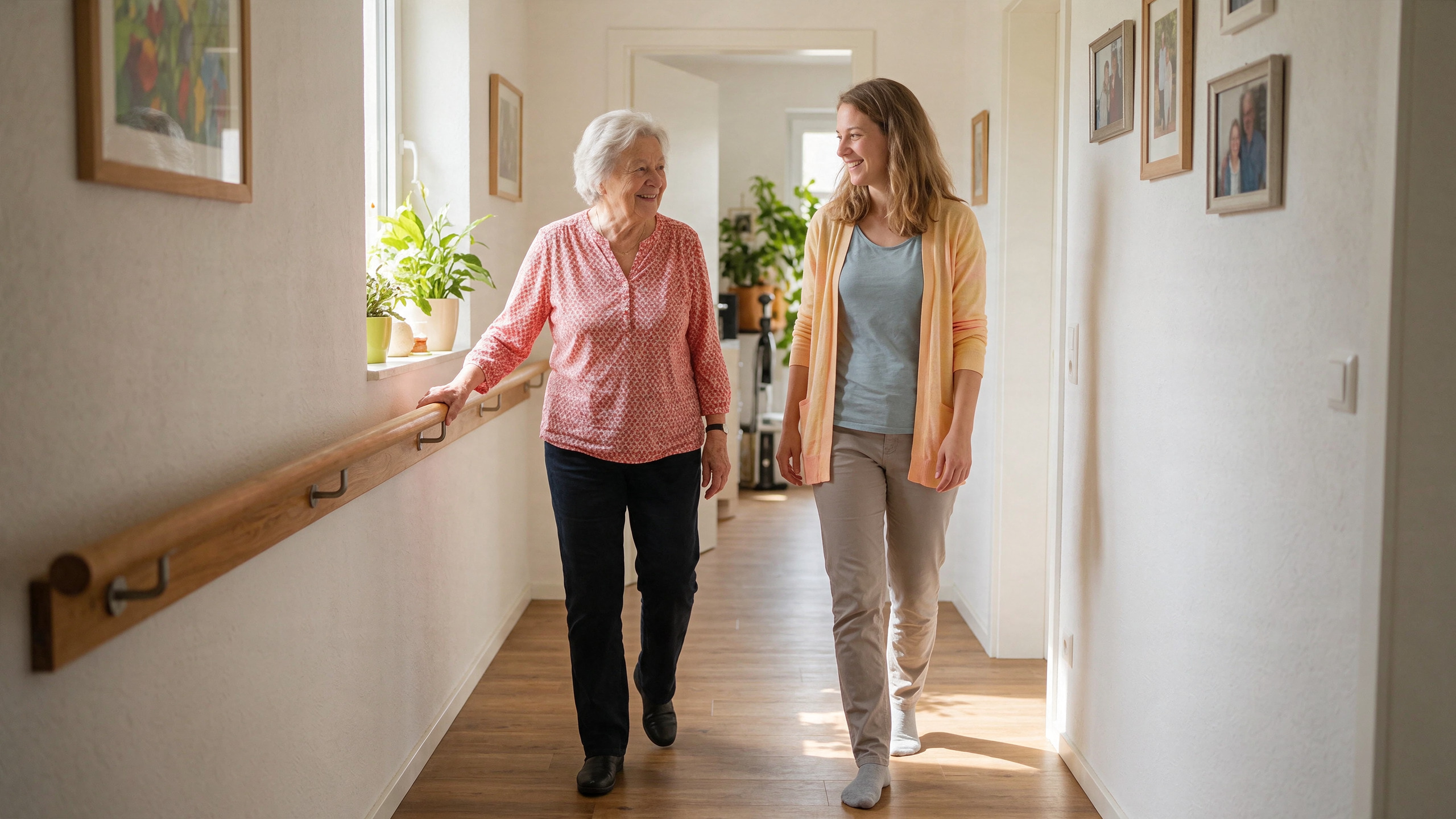
Falls Prevention for Older People: 6 Simple Home Checks
A fall can happen in a moment, but its effects can last for months. A broken bone, a bruised confidence and a growing fear of moving around can follow a single slip on a wet floor or a loose rug. The good news is that many falls can be prevented. This guide to falls prevention for older people explains why falls happen, six simple checks you can make around the home, and when to ask for help. It is written for families in Garstang, Longridge and across Lancashire who want their loved ones to stay safe and independent.
Why Falls Prevention for Older People Matters
The NHS advice on falls says anyone can have a fall, but it is more likely if you are older or have mobility problems. Making changes to prevent falls can help you avoid injuries and keep your confidence and independence.
Falls rarely have just one cause. The NHS lists weaker muscles, conditions that affect balance or mobility such as arthritis, stroke or Parkinson’s disease, low blood pressure, side effects of some medicines, problems with eyesight or hearing, and dementia. Often several factors combine.
That is why falls prevention for older people works best as a whole picture. It looks at the person, their health, their habits and their home together, instead of one thing in isolation.
Six Simple Home Checks for Falls Prevention for Older People
You do not need special equipment to begin. A calm walk around the home, seeing it through your loved one’s eyes, is a very good start. Here are six checks to make for falls prevention for older people at home.
1. Clear the floors
The NHS advises against too much clutter and things you could trip on, such as loose wires or rugs. Look at the main walking routes between the bedroom, bathroom, kitchen and front door. Move cables, small tables and boxes out of the way, and secure or remove rugs.
2. Light the way
Poorly lit hallways and stairs make trips more likely. Check that bulbs work and that light switches are easy to reach. A nightlight between the bedroom and the bathroom helps anyone who wakes in the dark.
3. Make the bathroom safer
Wet surfaces are a common risk. The NHS suggests a non-slip mat in the bath or shower, and considering grab rails in the bathroom and safety rails on steps. If getting in and out of the bath is hard, ask a healthcare professional about adaptations.
4. Choose the right shoes and slippers
The NHS recommends footwear that fits well, does not slip off and has a good grip. Worn-out slippers or walking about in socks can be risky on smooth floors, so check what your loved one wears around the house.
5. Keep help within reach
The NHS suggests wearing a personal alarm or carrying a mobile phone. Make sure it is charged and within reach, not left on a table in another room. Knowing help is close can also ease the fear of being alone after a fall.
6. Check eyes, ears and medicines
Regular eye tests and hearing checks matter, because problems with either can affect balance. If you think a medicine might be affecting balance, the NHS advises speaking to a GP or pharmacist. Please do not stop or change any medication yourself.
Staying Active as Part of Falls Prevention for Older People
Movement is one of the best protections. The NHS says physical activity guidelines for older adults recommend being active every day, and doing activities that improve strength and balance at least twice a week. Simple walks, gentle exercises and gardening can all help, and they are a friendly way to introduce falls prevention for older people into a daily routine.
Eating well and drinking enough matter too. The NHS explains that not eating and drinking enough can make you feel lightheaded or faint. A regular, balanced routine supports both strength and steadiness.
The NHS also reminds people not to attempt difficult tasks such as heavy lifting or reaching on tiptoe. It is always better to ask someone to help. Staying active safely, rather than pushing too far, is a core part of falls prevention for older people.
What to Do After a Fall
If a fall does happen, the NHS says to stay calm and take a couple of minutes to check for pain or injury before trying to move. It advises calling 999 if someone may have injured their head, back, neck or hip, or cannot get up. If they are in pain, injured or unwell, call NHS 111.
Any fall is worth mentioning to a GP, even if there is no obvious injury. The NHS says a GP can check balance and may refer someone to a specialist falls service, which can include strength and balance training, a check of the home and a review of medicines. Do not try to lift someone yourself if they cannot get up. Keep them warm and comfortable until help arrives. Planning ahead is part of falls prevention for older people, so make sure everyone in the household knows what to do.
Falls Prevention for Older People Living With Dementia
The NHS lists dementia among the possible causes of falls. Changes in judgement, memory and spatial awareness can make a familiar room feel confusing, especially in poor light or at night. Falls prevention for older people with dementia needs extra thought.
Routine and familiarity help. Try to keep furniture in the same places, keep walkways clear and make sure rooms are well lit. Calm, unhurried support at the times of day when someone is most unsteady, such as getting out of bed or going to the bathroom, can make a real difference.
Starting the Conversation About Falls Prevention for Older People
Raising the subject can feel delicate. Many people take pride in managing alone, and talk of safety rails or alarms can sound like a loss of independence. Try to frame it around staying independent for longer, rather than what has gone wrong.
Ask what worries them and what they would like to change. Offer to go around the home together, and let them choose which changes to make first. People are far more likely to use a grab rail or a nightlight if it was their own decision. Approached kindly, falls prevention for older people becomes a shared plan, not a lecture.
If they have already had a fall, or you are worried about balance, encourage them to see their GP. A GP can look at the reasons behind falls and suggest what might help.
How Home Care Supports Falls Prevention for Older People
Falls prevention for older people is easier when someone is there each day who knows what normal looks like. A familiar carer might notice a loved one holding the furniture more than usual, hesitating on the stairs or avoiding the bathroom. They can share these small changes with the family, so that you can speak to the GP early.
At Unique Homecare, we build care around each person’s routines. That might mean walking alongside someone to the garden, helping them move safely around the kitchen, or simply keeping company so that they feel confident getting up and about. Our support for older people at home is shaped around keeping people independent, and families can stay in touch with our team through WhatsApp.
Imagine a mother in Longridge who has been nervous since a stumble on her back step. A regular carer helps her feel steady again, checks that her slippers fit and keeps her hallway clear. Over time she goes out more and worries less. Confidence is a big part of staying safe, and it is something good falls prevention for older people always keeps in mind.
A Final Word
Falls are common, but they are not an inevitable part of growing older. A few thoughtful changes, regular movement and the right support can make a real difference to safety and confidence. Good falls prevention for older people starts small and builds over time.
If you would like to talk about falls prevention for older people in your family, we are always happy to answer questions. Get in touch and we will guide you through your options.

