
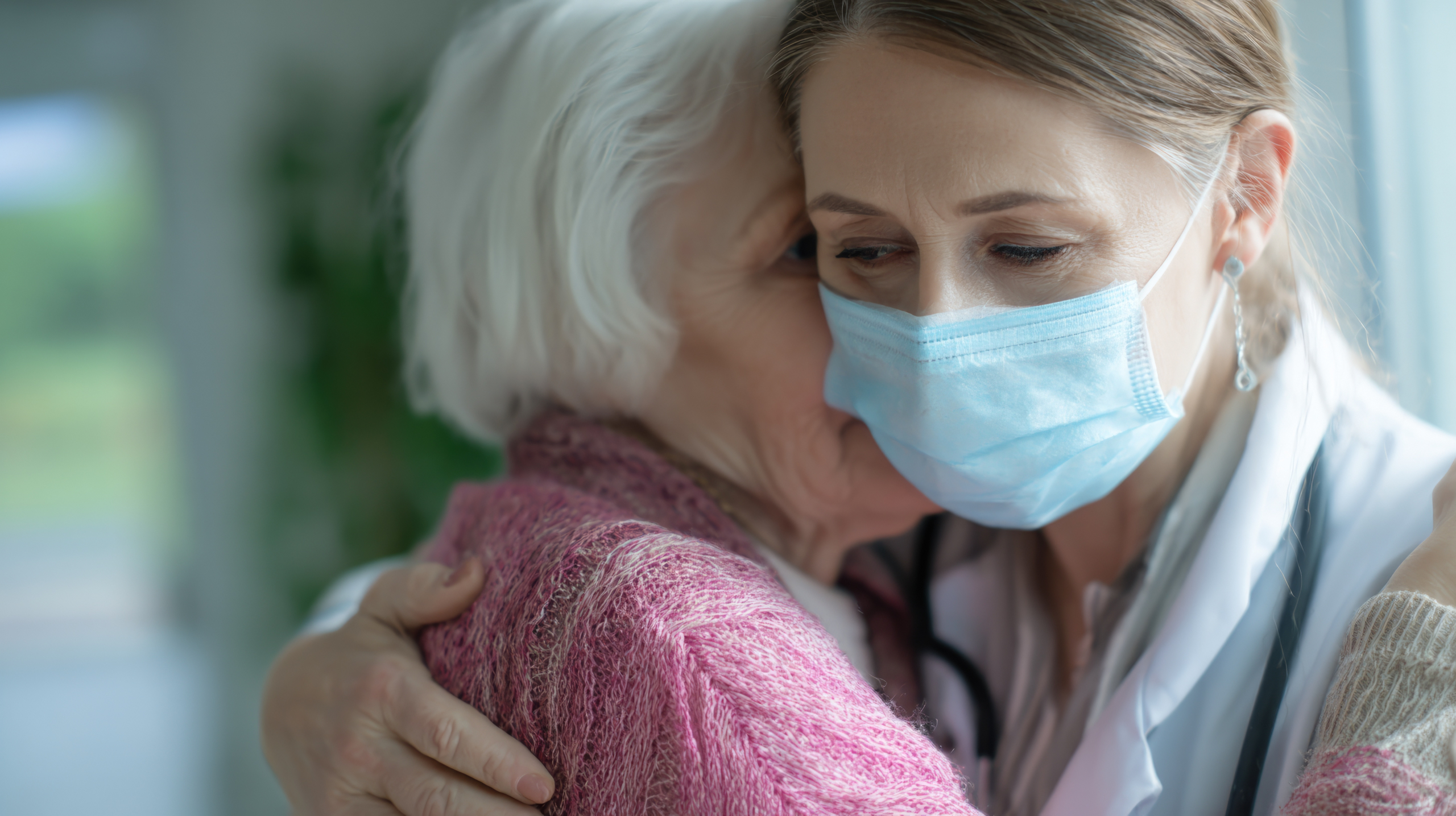
Dementia Training for Nurses: What Families Need to Understand About Clinical Dementia Knowledge
When a family is arranging care for a loved one with dementia, the question of training rarely comes with a ready answer. Most families assume that anyone presenting themselves as a care professional has received adequate preparation. The reality is more varied than that, and understanding what dementia training for nurses and specialist care professionals involves can help families ask sharper questions and make more confident decisions.
This guide explains what dementia training for nurses covers at a clinical level, why that depth of knowledge matters in home care settings, and what families in Forton, Cockerham, and across Lancashire should look for when choosing a provider whose carers bring genuine specialist knowledge to every visit.
What Dementia Training for Nurses Covers at a Clinical Level
Dementia training for nurses goes significantly beyond general awareness. Where awareness-level training introduces the condition and its broad effects, clinical dementia training for nurses builds deep, applied knowledge across several specialist areas.
These typically include:
- Understanding the neuropathology of dementia. Nurses completing dementia training for nurses learn how different types of dementia, including Alzheimer’s disease, vascular dementia, Lewy body dementia, and frontotemporal dementia, affect the brain in distinct ways. Understanding this underpins every clinical decision about care and communication.
- Assessment and monitoring. Clinical dementia training for nurses includes validated tools for assessing cognitive function, tracking changes over time, and recognising the early signs of delirium, pain, or physical illness in someone whose dementia makes self-reporting unreliable.
- Medication management and risks. People with dementia are often on complex medication regimens. Dementia training for nurses covers the interactions between dementia medications, the risks of antipsychotic use, and how to monitor for side effects in people who cannot clearly articulate how they feel.
- Behavioural and psychological symptoms. Clinical dementia training for nurses addresses what the profession calls BPSD (behavioural and psychological symptoms of dementia): agitation, aggression, wandering, sleep disturbance, and depression. Nurses learn to identify triggers, use non-pharmacological approaches first, and involve families and wider teams when more complex intervention is needed.
- Person-centred and relationship-based care. This is where dementia training for nurses moves beyond the clinical into the human. Nurses learn to build care around each individual’s history, relationships, values, and what gives their life meaning, not just around their current symptoms and needs.
- End-of-life dementia care. Clinical dementia training for nurses includes the particular challenges of supporting people in the later stages of the condition, including anticipatory care planning, comfort-focused care, and working with families during what is often an extended period of loss and grief.
Why Dementia Training for Nurses Matters to Families Choosing Home Care
Most home care professionals are not nurses. But the depth of knowledge that dementia training for nurses represents sets the benchmark against which all specialist dementia care should be measured.
When a family in Forton or Cockerham brings a care provider into their home, they are trusting that person with someone they love. The question is not only whether the carer is kind, though that matters enormously. It is whether they have the specialist knowledge to recognise when something is wrong, to respond appropriately under pressure, and to deliver care that genuinely supports the person’s wellbeing rather than simply completing a task list.
The clinical knowledge developed through dementia training for nurses, including assessment skills, an understanding of medication risks, and the ability to read behavioural symptoms as communication, does not have to be exclusive to registered nurses. Care providers that take dementia seriously invest in training their teams to a depth that reflects those clinical standards, even where the formal qualification differs.
For families trying to assess this, the questions to ask are practical. Can the carer explain why someone with dementia might become more distressed in the evening? Do they understand the risks associated with antipsychotic medication? Can they describe how they would recognise and respond to signs of pain in someone who cannot communicate verbally? Carers who have received thorough dementia training for nurses-level knowledge will be able to answer these questions with confidence.
Dementia Training for Nurses and the Home Care Setting
Hospital and clinical settings have structures that support clinical decision-making: colleagues to consult, specialist teams nearby, escalation pathways, and documented protocols. A home care environment has none of these. The carer arriving at a house in Cockerham or Forton is often the only professional present. What they know, and how they apply it, is what the person with dementia has.
This makes the standards set by dementia training for nurses especially relevant in home care. A carer who can identify the early signs of a urinary tract infection in someone with dementia, recognise that increased confusion may signal a physical health change rather than a progression of dementia, and communicate that clearly to a family or district nurse, is providing a level of support that goes well beyond basic personal care.
The NHS guidance on help and support for people with dementia highlights the role of specialist dementia nurses, including Admiral Nurses, in providing expert support to families navigating complex care situations. This kind of specialist knowledge, while delivered through different channels in a home care setting, reflects exactly the depth of understanding that dementia training for nurses is designed to build.
Dementia Training for Nurses: What Good Home Care Looks Like in Practice
For families, the practical signs of nurse-level dementia knowledge in a home care setting tend to show up in the same ways. A carer who asks about the person’s full medication history before their first visit. A carer who notices a change in behaviour and connects it to a possible physical cause rather than attributing it to dementia progression. A carer who documents observations carefully and communicates them to the family and, where needed, to a GP or district nurse.
These are not instincts. They are learned skills, developed through the kind of rigorous, clinically grounded dementia training for nurses that good specialist providers embed across their whole team.
They also show up in the relational qualities of care. A carer who understands person-centred practice at the level it is taught in dementia training for nurses does not treat personal care as a task to complete. They understand that the way a morning routine is conducted, the words used, the pace maintained, the dignity preserved throughout, shapes the emotional state of the person with dementia for the rest of the day.
Dementia Training for Nurses and Holistic Care
One of the things that distinguishes clinical dementia training for nurses from basic awareness is its insistence on whole-person care. The clinical picture matters. But so does the person’s sense of identity, their relationships, their history, and the things that bring comfort and meaning to their daily life.
This is why specialist dementia care is not reducible to medication management or safety protocols, important as those are. It is also about creating the conditions in which someone can experience joy, connection, and dignity even as the condition progresses.
Understanding why dementia training is important at every level, from awareness to clinical depth, is what shapes truly holistic care. At Unique Homecare, this is the standard we work toward. Our Health and Wellbeing Team receives ongoing specialist dementia training that reflects the depth and rigour of clinical knowledge, even where formal nursing qualifications differ.
We were proud national finalists for Outstanding Contribution to Dementia Care at the Dementia Care Awards. We are CQC registered and rated Good. We support families across Forton, Cockerham, Garstang, Longridge, and the wider Lancashire area, and we offer Fell Pony dementia wellbeing sessions as part of a genuinely holistic approach to care that goes well beyond the standard visiting care model.
Here to Help
Dementia training for nurses represents one of the highest benchmarks in dementia knowledge. For families choosing home care, understanding what that standard involves helps you recognise the difference between a provider whose training is thorough and one for whom it is a compliance checkbox.
For families in Forton, Cockerham, and across Lancashire, choosing a provider whose team is trained to a genuine specialist standard, not just an awareness level, is one of the most important steps you can take for a loved one with dementia.
You do not have to navigate this alone. Our team is here to offer reassurance and guidance. Get in touch with the Unique Homecare team to arrange a no-obligation conversation about care in your area.


