
Christmas With Dementia: 7 Gentle Ways to Enjoy the Day
Christmas is full of traditions, music and people we love. When someone you care about is living with dementia, it can also feel like a lot to organise. You may wonder how to keep the magic without causing worry or confusion. The good news is that Christmas with dementia can still be warm, joyful and meaningful. This guide shares seven gentle ways to enjoy the day, with simple ideas for families in Garstang, Longridge and across Lancashire. The aim is not a perfect Christmas, but a happy and calm one.
Why Christmas With Dementia Can Feel Different
The festive season brings change. Decorations appear, routines shift and visitors arrive. For most of us, this is part of the fun. For someone with dementia, a house that suddenly looks and sounds different may feel unfamiliar or unsettling. That is why Christmas with dementia calls for a little extra planning.
The Alzheimer’s Society points out that a person with dementia may feel overwhelmed at Christmas, so it is best not to overdo it. That does not mean the season has to lose its sparkle. It means shaping the day around what the person can enjoy, at a pace that suits them.
Many families find that when they relax their expectations, the day becomes easier for everyone. A shorter lunch, a quieter room and a few well-loved traditions often mean more than a long, busy day. Christmas with dementia is often about presence, rather than perfection.
Seven Gentle Ways to Enjoy Christmas With Dementia
These ideas draw on advice from the Alzheimer’s Society guide to supporting a person with dementia at Christmas, along with the kind of practical thinking that many families find helpful. Choose the ones that suit your loved one and your own Christmas with dementia.
1. Put decorations up gradually
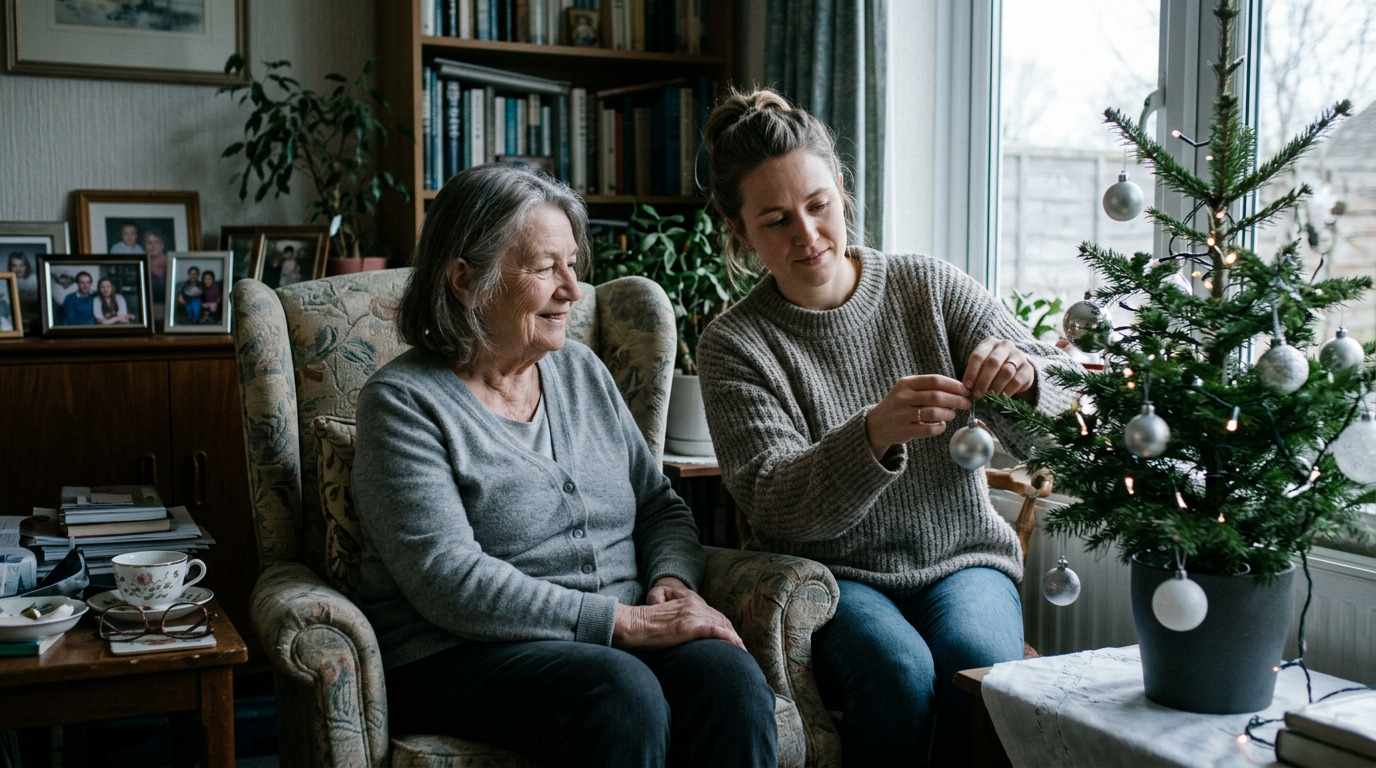
Instead of transforming the house in one afternoon, introduce decorations slowly over several days, so it does not feel like a sudden change to a familiar space. If the person would like to, invite them to help. Hanging a favourite bauble or arranging cards can be a lovely shared moment.
2. Keep it simple and familiar
Choose traditions the person has always loved, such as a particular carol, a family recipe or a well-worn nativity set. Familiar things are comforting, and they often help people feel more like themselves. Fewer new elements usually means less confusion.
3. Create a quiet space
Set aside one room as a calm retreat, away from loud conversation and the television. A comfortable chair, soft lighting and perhaps some gentle music let your loved one rest whenever they need to. Knowing the quiet room is there can help the whole family relax.
4. Spread out the visits
A house full of guests can be tiring and noisy. Ask friends and relatives to visit at different times over the festive period instead of all at once. Short, friendly visits are often easier for the person to enjoy, and they give everyone more one-to-one time.
5. Play familiar music
Music can bring back memories and lift the mood. Old carols and songs from the person’s younger years may spark smiles, humming or even dancing in the kitchen. Keep the volume gentle, and switch it off if it starts to feel like too much.
6. Stick to the usual routine
Wherever possible, keep to usual mealtimes, rest times and bedtime. A predictable day helps people feel safe, even in the middle of celebrations. If Christmas lunch normally happens at one o’clock but your loved one eats at noon, consider adjusting the meal to suit them.
7. Involve them in simple tasks
Many people enjoy feeling useful. Setting the table, stirring a mixing bowl or wrapping a small present can bring a sense of purpose. Choose jobs that are simple and low-pressure, and let the person stop whenever they like. If they show little interest in decorations, cards or presents, try not to be disappointed. Their enjoyment may look different from before, and that is perfectly fine at Christmas with dementia.
Food, Drink and Presents for Christmas With Dementia
Christmas dinner is often the centrepiece, but it does not need to be a grand event. Offer favourite foods in smaller portions, and make sure there are plenty of drinks throughout the day. The Alzheimer’s Society notes that eating and drinking can be difficult for people with dementia, so a relaxed, unhurried mealtime helps. Treats such as chocolates and mince pies can be spread over several days.
When it comes to presents, simple is best. Soft jumpers, a comfortable blanket, photo albums, favourite music or a familiar scent often go down better than anything complicated. Opening a gift at a quiet moment, rather than in front of a crowd, can take the pressure off. For many families, enjoying Christmas with dementia means giving time and attention above all.
Keeping the Evenings Calm at Christmas With Dementia
After a busy day, some people become tired or restless as the light fades. Plan for a gentle wind-down, with softer lighting, quiet music and a familiar bedtime routine. If visitors are staying, ask them to keep the evening low-key. A peaceful end to the day helps everyone, and it is often what people remember most warmly about Christmas with dementia.
Making Christmas With Dementia Easier for Family Carers
If you are the main carer, the festive season can be hard work. You may be cooking, hosting, wrapping and caring all at once, while hoping everyone has a good time. Please be kind to yourself.
It helps to ask for help early. Invite relatives to bring a dish, take over the washing up or sit with your loved one for an hour while you rest. Share the plan before the day, so that everyone knows what to expect and how to support the person.
Try to let go of guilt. If you have to cut the day short, say no to a big gathering or take a quiet walk by yourself, you are still giving your loved one a good Christmas. A calm carer is a great gift. Planning ahead for Christmas with dementia often brings relief to the whole household.
When You Cannot Be There for Christmas With Dementia
Sometimes families live far away, or cannot visit as planned. The Alzheimer’s Society has ideas for helping a person feel part of the festivities even when you are not in the same place.
Think about the sights and sounds that create a festive feeling, such as decorations, familiar music or the radio. You could post a card or a small present, and arrange a video call at a time of day when your loved one is usually at their best. Photographs from past Christmases can be lovely, but choose carefully, because some images may bring up difficult memories.
A short, cheerful call can mean a great deal. Keep it simple, smile and talk about things the person enjoys. Even if they do not remember the call afterwards, the warm feeling it creates may stay with them.
Support for Christmas With Dementia at Home
Christmas can be easier when you have extra hands and a familiar face to lean on. Picture a daughter in Longridge who has always cooked the family lunch for her father. This year, a carer he knows visits in the morning, helps him dress in his favourite jumper and keeps him company while she prepares the meal. The day feels calmer for both of them, and Christmas with dementia feels more manageable.
At Unique Homecare, we build care around the person’s own routines, interests and traditions. Our specialist dementia care helps people stay comfortable in familiar surroundings, and our carers take time to understand what makes each person smile. Families can also stay in touch with our team through WhatsApp, so you are never left wondering how a visit went.
If you would like to talk about support over the festive season, contact us early. Christmas with dementia is easier to plan when there is time to get to know each other first.
What to Do Next
There is no right or wrong way to spend Christmas with dementia. What matters is that your loved one feels safe, included and loved. A quiet moment by the tree, a favourite song or a shared cup of tea can be every bit as special as a big family feast.
To find out how we can support you or a loved one, get in touch with our friendly team.


