
Dementia Communication Training: A Practical Guide for Lancashire Families
Of all the challenges that come with caring for a loved one with dementia, communication is often the one families find hardest. Words fail. Conversations become confusing. A familiar face is met with a blank look, or a simple question triggers unexpected distress.
None of this is the fault of the person with dementia, and none of it means connection is lost. What it means is that the way you communicate needs to change. That is exactly what dementia communication training is designed to help with.
This guide explains what dementia communication training involves, why it matters so much for families in Scotforth, Galgate, and across Lancashire, and how trained carers apply these skills in practice every day.
Why Dementia Communication Training Matters
Dementia does not only affect memory. It changes how a person processes language, finds words, and understands what is being said to them. As the condition progresses, someone who was once articulate may struggle to complete a sentence, repeat the same question, or respond in ways that seem unrelated to the conversation.
Without dementia communication training, families often respond in ways that, however well-intentioned, can make things worse. Correcting a factual error. Repeating a question more loudly when there is no response. Filling silence with too many words. These are natural reactions, but they can increase anxiety and confusion for someone with dementia.
Dementia communication training replaces those instincts with approaches that actually work. It does not require any background in care. It is practical, learnable, and it makes a real difference to daily life.
What Dementia Communication Training Covers
Good dementia communication training does not focus only on what to say. It covers the full picture of how human beings connect, which becomes more important, not less, when verbal language starts to fade.
The core areas typically include:
- Tone and pace. Speaking slowly and calmly, using a warm tone of voice, and leaving enough space for a response. Rushing a conversation, even without meaning to, can cause the person with dementia to withdraw or become agitated.
- Simple, clear language. Short sentences. One idea at a time. Avoiding abstract questions or choices that require the person to hold multiple things in mind at once.
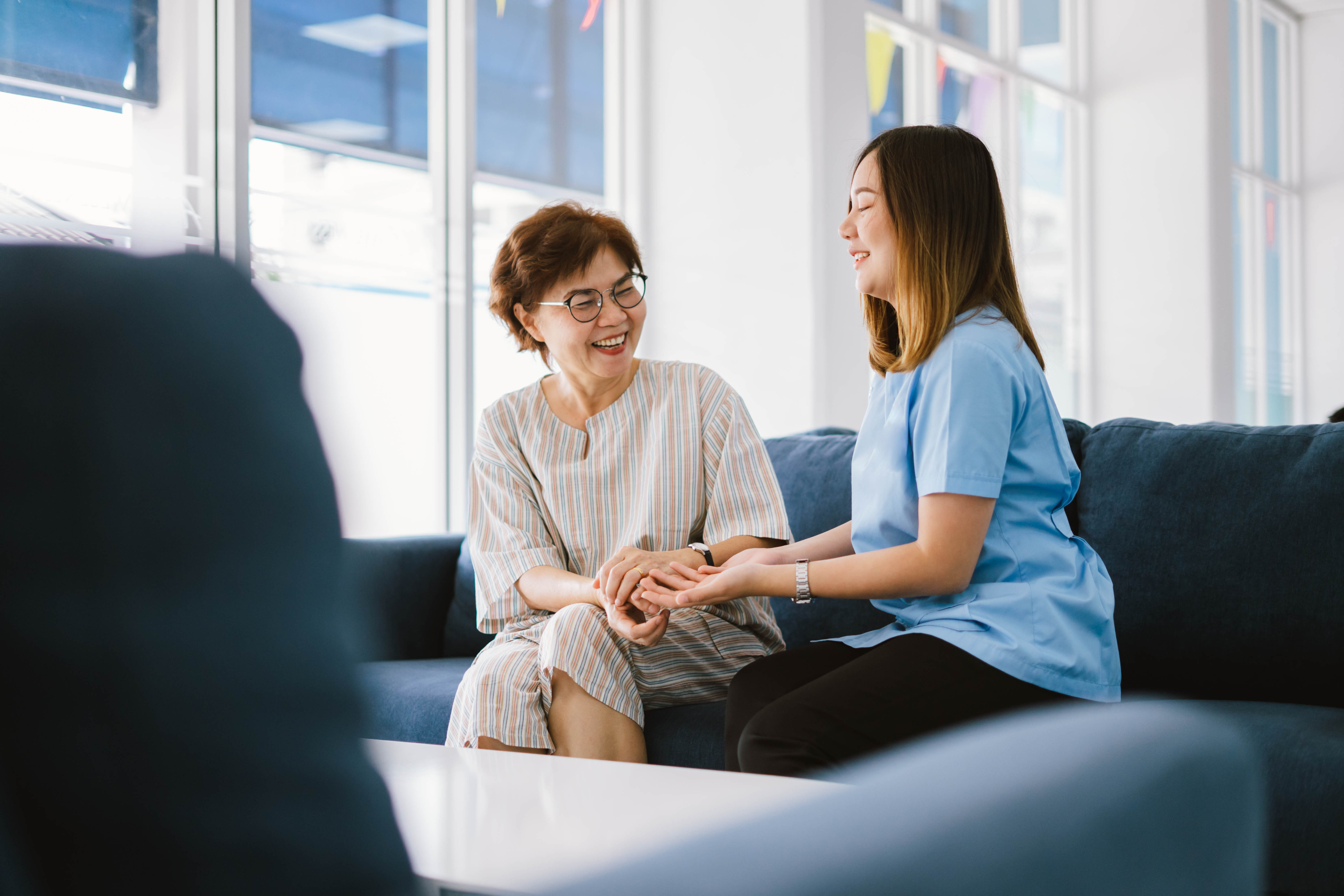
- Non-verbal communication. Eye contact, facial expression, gentle touch, and body language often carry more meaning than words. Dementia communication training teaches carers to use and read these cues consciously.
- Avoiding correction. If someone with dementia says something factually wrong, correcting them rarely helps and often causes distress. Training teaches carers to engage with the feeling behind the words rather than the accuracy of them.
- Entering the person’s reality. If someone believes they need to collect their children from school, arguing that the children are grown up serves no purpose. Dementia communication training teaches how to respond with empathy and gentle redirection instead.
- Reading behaviour as communication. Agitation, withdrawal, or repeated actions are often a form of communication when words are no longer available. Trained carers learn to notice these signals and respond to the underlying need.
Age UK’s guidance on caring for someone with dementia also highlights the value of simple, clear communication and the importance of listening for meaning rather than correcting what is said. These principles sit at the heart of effective dementia communication training.
Dementia Communication Training for Family Carers
Many families caring for a loved one in Scotforth, Galgate, or the surrounding Lancashire communities have never received any formal guidance on communication. They are learning on the job, often under significant emotional pressure.
The moments that feel most distressing, a parent who does not recognise you, a partner who becomes frightened without apparent reason, a repeated question that has already been answered a dozen times, are precisely the moments where dementia communication training makes the biggest difference.
When families understand why these things happen, they stop feeling like personal rejections or signs of failure. They become things to navigate, with tools and approaches that actually help.
Some of the most useful skills from dementia communication training for family carers include:
- Approaching from the front, making eye contact, and saying the person’s name before starting a conversation
- Using touch, such as a hand on the arm, to provide reassurance when words are not landing
- Asking questions that need only a yes or no answer, rather than open questions that require recall
- Joining in with what the person is experiencing emotionally, rather than trying to redirect them to factual accuracy
- Recognising that repetition is not deliberate and does not require a different answer each time
These are not complicated techniques. But they shift the quality of every interaction, and over time they reduce distress for both the person with dementia and the family members caring for them.
Dementia Communication Training and Professional Care
For professional carers, dementia communication training is not optional. It is a core part of what it means to provide genuinely specialist dementia support.
A carer who has not received proper dementia communication training may not recognise when a client’s agitation is a form of communication. They may not know how to de-escalate a difficult moment, or how to use body language to provide reassurance when words are causing confusion. Even with the best intentions, untrained communication can inadvertently increase distress.
By contrast, a carer who has completed thorough dementia communication training brings a different quality of presence into the room. They notice what is not being said as much as what is. They slow down. They create calm. And they build the kind of trust that allows someone with dementia to feel safe, even on a difficult day.
This kind of care is not visible in a job advert or a brochure. Families see it in the small things. The way a carer sits at the same level rather than standing over someone. The way they wait without filling the silence. The way they respond to a repeated question with the same patience on the fifth telling as on the first.
Dementia Communication Training as Part of a Broader Approach
Dementia communication training does not stand alone. It is most effective when it is part of a holistic approach to dementia care that sees the whole person, not just the symptoms.
Understanding someone’s life history, their relationships, the things that brought them joy and the things that unsettled them, gives dementia communication training context. A carer who knows that a client worked as a schoolteacher can use that knowledge to connect through topics that carry warmth and familiarity. A carer who knows that someone finds physical touch reassuring will use it differently than one who knows it causes discomfort.
This is why dementia communication training and person-centred care are inseparable. Communication that is technically correct but lacks personal knowledge misses the point. The goal is not just to avoid distress. It is to maintain genuine human connection for as long as possible.
Our dementia awareness training guidance explores more of the foundations that underpin this kind of care, including how families can build their own understanding alongside the professional support their loved one receives.
The Right Support Is Available
At Unique Homecare, dementia communication training is embedded in how our Health and Wellbeing Team works. Our carers do not just complete a module and move on. They apply what they have learned in every visit, with every client, and they are supported to develop and deepen those skills over time.
We were proud national finalists for Outstanding Contribution to Dementia Care at the Dementia Care Awards. We are CQC registered and rated Good. And we work with families across Scotforth, Galgate, Garstang, Longridge, and the wider Lancashire area to provide dementia care that is genuinely person-centred.
We also offer our Fell Pony dementia wellbeing sessions, which use the calming presence of native ponies to support connection and emotional wellbeing for people who may find verbal communication increasingly difficult. It is one example of how we think about communication in its broadest sense.
If you would like to discuss care options in more detail, our team is here to listen. Get in touch with the Unique Homecare team and we will guide you through your options.


